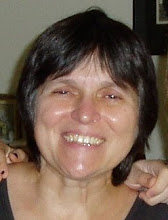
I met a woman from Burundi
Florence Ntakarutimana is doing astounding and courageous work in Rwanda with the program Healing and Rebuilding Our Communities, sponsored by Quaker groups including the African Great Lakes Initiative. I missed her talk to our whole Illinois Yearly Meeting but learned from her in worship sharing. HROC brings together Hutus and Tutsis to acknowledge the trauma that the Rwandan genocide of the 1990s brought to so many, mourn it, find appropriate ways to express anger and rebuild trust. Forgiveness is not necessary, though it could happen. Florence speaks four languages: Kinyarwandan (the language of Rwanda), French, English and Swahili. The theme of our annual yearly meeting, and hence of the worship sharing, was reconciliation. Florence prays and she listens. That's how she does her work. Her faith impressed me.
Friday, June 27, 2008
Thursday, June 05, 2008

Green vacation, day one
This year no 3,000 mile drives to northern Maine. My family and I are doing day trips and using public transportation. We drew up a list of places around Chicago that will delight and edify. Yesterday's destination: Starved Rock State Park near Utica. Starved Rock is formed of St. Peter sandstone, which is pretty soft as rocks go. In the canyons you can see the layers that have been worn through as you inspect the rock walls. (The picture looks like LaSalle Canyon.) It had rained the day before, so the waterfalls and streams were running verdantly well. Andrew's good eye spotted a cedar waxwing. Also a tiny snake that stuck its tiny tongue out at us, two deer in a roadside meadow, many millipedes on the march, a blue butterfly. The flowers were stunning: yellow iris, native columbine, jack-in-the-pulpit, spiderwort, pinks, wild geranium. Small sunny patches in the forest held bouquets of late spring flowers. The kids explored and got wet, the adults named things. It took an hour to get there, a green place to visit in a green way.
Tuesday, June 03, 2008
The appearance of the bull
changes once you enter the ring. That also comes from Johns Hopkins ethicist Thomas Finucane, whom I heard speak. A friend's father is coming to terms with the end of his life, and is hospitalized. She reports he said this: Do you want to die? hospital staff had asked him, seeking to ascertain his wishes. No, he responded. Do you? Only the terminally unhappy volunteer to leave, and their judgment is not sound.
changes once you enter the ring. That also comes from Johns Hopkins ethicist Thomas Finucane, whom I heard speak. A friend's father is coming to terms with the end of his life, and is hospitalized. She reports he said this: Do you want to die? hospital staff had asked him, seeking to ascertain his wishes. No, he responded. Do you? Only the terminally unhappy volunteer to leave, and their judgment is not sound.
Friday, May 23, 2008

What I'm reading
When The World Was Young. By Tony Romano.
I remembered a good review of this novel and was happy to find myself at the same table with the author during this year's Society of Midland Authors banquet. It's about the Peccatori family in the 1950s on Chicago's West Side, six kids, mom and dad, zio and zia. My Latin is rusty but I do know that the family's last name is related to the word for sin. It's so '50s Chicago ethnic Catholic I can just about smell the food at the beef stands referred to. Ain't nuthin like an Italian beef sandwich. (Some of us Polish kids preferred Italian beef to Polish sausage. ) It reminds me of home, of Catholic school uniforms, bungalows and hanging out after school. Nicely vivid.
Tuesday, May 20, 2008

Make way for ducklings
While riding my bike this morning on the Gilman Nature Trail I hit the brakes to watch the passage of the first duck family I've seen this year. Mama duck was leading eight wee ducklings who looked so alike and stuck so close together I couldn't quite count them as they waddled in her wake. 'Tis the season for bird birth. Also seen pathside as spring ripens here in suburban Chicago: a wild geranium in pale purple bloom, rabbit running across the trail, an egret simply standing around in a pond. I may not be in Colorado or Oregon on vacation, but this bike trail grows lovelier the more I ride it, and it's less than 5 minutes from my house.
Monday, May 19, 2008
Spiritual direction points the way inside
The English language (and probably most others) has few good words for the processes that happen inside us: thinking, feeling, sensing. One process that doesn't have a very nuanced language is healing. Sure, we know the process of healing from physical wounds, because science has given us words that describe what's going on. But psychological trauma is relatively less understood. So people with PTSD and awful childhoods and genocide survivors and other experiences that have hurt them are the walking wounded, only they don't have bandages or crutches.
This is by way of introducing a spiritual therapeutic technique I ran across while hunting for story ideas and investigating spiritual direction. Visio divina sounded intriguing; it's a particular type of contemplative prayer practice that can happen in spiritual direction. Spiritual director Karen Kuchan says visio divina might be especially helpful for younger adults -- Gen X -- who as a generation have very good BS detectors and also a deep longing for authenticity, that is, the real McCoy beyond slogans, commercials, and clay-footed idols.
Visio divina involves the use of internal images during contemplation. As Kuchan describes it in an article she wrote for Presence: An International Journal of Spiritual Direction , it's a time of silent opening to the presence of God, which prompts an emotional experience -- what is called cataphatic, or experience- or emotion-based, as opposed to apophatic, the wordless contemplative space that Buddhist meditation teaches. She also suggests that the contemplative process that includes three "persons" -- spiritual director, client (I hate the word "directee") and God -- "reflect the inner life of God imagined in the Trinity. " This is hard to understand at first blush, but I find the notion that God is a process more intriguing than imagining the relationships among an old guy with a white beard, his son and their pet bird.
I hesitated to write about this because it really is hard to find the words for something so internal. Psychology has a very good language for it. But psychology generally doesn't traffic with religion, thanks to Herr Doktor Freud and others who have found religion an illusion. It's up to the mystics of religion and spiritual directors such as Kuchan. Maybe Quakers too. Sitting in silence for an hour at meeting has given me lots of practice in waiting for God, which holds much more promise than waiting for Godot.
The English language (and probably most others) has few good words for the processes that happen inside us: thinking, feeling, sensing. One process that doesn't have a very nuanced language is healing. Sure, we know the process of healing from physical wounds, because science has given us words that describe what's going on. But psychological trauma is relatively less understood. So people with PTSD and awful childhoods and genocide survivors and other experiences that have hurt them are the walking wounded, only they don't have bandages or crutches.
This is by way of introducing a spiritual therapeutic technique I ran across while hunting for story ideas and investigating spiritual direction. Visio divina sounded intriguing; it's a particular type of contemplative prayer practice that can happen in spiritual direction. Spiritual director Karen Kuchan says visio divina might be especially helpful for younger adults -- Gen X -- who as a generation have very good BS detectors and also a deep longing for authenticity, that is, the real McCoy beyond slogans, commercials, and clay-footed idols.
Visio divina involves the use of internal images during contemplation. As Kuchan describes it in an article she wrote for Presence: An International Journal of Spiritual Direction , it's a time of silent opening to the presence of God, which prompts an emotional experience -- what is called cataphatic, or experience- or emotion-based, as opposed to apophatic, the wordless contemplative space that Buddhist meditation teaches. She also suggests that the contemplative process that includes three "persons" -- spiritual director, client (I hate the word "directee") and God -- "reflect the inner life of God imagined in the Trinity. " This is hard to understand at first blush, but I find the notion that God is a process more intriguing than imagining the relationships among an old guy with a white beard, his son and their pet bird.
I hesitated to write about this because it really is hard to find the words for something so internal. Psychology has a very good language for it. But psychology generally doesn't traffic with religion, thanks to Herr Doktor Freud and others who have found religion an illusion. It's up to the mystics of religion and spiritual directors such as Kuchan. Maybe Quakers too. Sitting in silence for an hour at meeting has given me lots of practice in waiting for God, which holds much more promise than waiting for Godot.
Sunday, May 11, 2008
For my absent daughter, on Mother’s Day
Today, while folding laundry you had left behind, I found myself in your room, puzzled. I opened your drawers and I didn’t know where to put things. Where did you get these socks? Hmm, where does the underwear go? What nice pants – how come I’ve never seen them?
Time was, I knew everything you wore. I picked it out, paid for it, put it on you, washed it in baby laundry soap so it wouldn’t irritate your skin, wrote thank-you notes to those who gave you clothing as a gift. I remember those days; they were not all that long ago.
Now you are 19, away at college, and you’ve just spent three days by your all-alone self in the wilderness. Sure, it wasn’t that far from home, but you had to sleep alone, walk alone, get yourself there and back again, cook, put up your little tent house, and trust to the rangers and the stars. I know you took my car, but how did you get there? How did you grow so far and go so far? I am so glad you did. I am so glad you will come back. You will return and tell me your adventures, your travels, your studies, your thoughts, your problems. I am sorry I missed you after you returned. I had some obligations of my own. I look forward to your news, your life. I gave you life, and there you go, running with it, my runner.
The year my own mother died – your Grandma Zdun – I had my first Mother’s Day alone. Today is not my first Mother’s Day alone in our family, in this generation. Your little brother is still home, and I get to take care of him. You also were away once before, off on another journey, that one to Mexico, to learn another language, find another family. You did both of those tasks so well. You also helped me get ready for many Mother’s Days to come, by leaving the nest. I’m glad you will come back.
The year my own mother died, I wrote a very good piece about mothers and children, about being left alone, about death and life and noticing what is taken for granted. I spent days at my mother’s house; I didn’t recognize her clothes, but I recognized her habits. I didn’t recognize your clothes, but I recognize your habits: the way you fold things, which you have taught me. You are teaching me things. You have always taught me things, from second one of day one, your birthday, when you slid out of my womb and they put you on my chest and said, it’s a girl. My daughter. I’m your mom. You have been leaving me since the day you left the sanctuary I provided in your very earliest days, the womb. Keep going. You’re headed in the right direction.
It’s hard to let you go, though, so I’m glad you will come back. Come back as often as you can, as often as you need. Your dad and I will be here.
Today, while folding laundry you had left behind, I found myself in your room, puzzled. I opened your drawers and I didn’t know where to put things. Where did you get these socks? Hmm, where does the underwear go? What nice pants – how come I’ve never seen them?
Time was, I knew everything you wore. I picked it out, paid for it, put it on you, washed it in baby laundry soap so it wouldn’t irritate your skin, wrote thank-you notes to those who gave you clothing as a gift. I remember those days; they were not all that long ago.
Now you are 19, away at college, and you’ve just spent three days by your all-alone self in the wilderness. Sure, it wasn’t that far from home, but you had to sleep alone, walk alone, get yourself there and back again, cook, put up your little tent house, and trust to the rangers and the stars. I know you took my car, but how did you get there? How did you grow so far and go so far? I am so glad you did. I am so glad you will come back. You will return and tell me your adventures, your travels, your studies, your thoughts, your problems. I am sorry I missed you after you returned. I had some obligations of my own. I look forward to your news, your life. I gave you life, and there you go, running with it, my runner.
The year my own mother died – your Grandma Zdun – I had my first Mother’s Day alone. Today is not my first Mother’s Day alone in our family, in this generation. Your little brother is still home, and I get to take care of him. You also were away once before, off on another journey, that one to Mexico, to learn another language, find another family. You did both of those tasks so well. You also helped me get ready for many Mother’s Days to come, by leaving the nest. I’m glad you will come back.
The year my own mother died, I wrote a very good piece about mothers and children, about being left alone, about death and life and noticing what is taken for granted. I spent days at my mother’s house; I didn’t recognize her clothes, but I recognized her habits. I didn’t recognize your clothes, but I recognize your habits: the way you fold things, which you have taught me. You are teaching me things. You have always taught me things, from second one of day one, your birthday, when you slid out of my womb and they put you on my chest and said, it’s a girl. My daughter. I’m your mom. You have been leaving me since the day you left the sanctuary I provided in your very earliest days, the womb. Keep going. You’re headed in the right direction.
It’s hard to let you go, though, so I’m glad you will come back. Come back as often as you can, as often as you need. Your dad and I will be here.
Monday, April 21, 2008
The stranger the better
This counterintuitive idea was the theme of the sermon at the church I dropped in on yesterday because it was too nice to drive an hour to my meeting. Worshipping locally has several good things going for it, and yesterday the benefit was guest preacher Susan Brooks Thistlethwaite, president of Chicago Theological Seminary. Explaining and then applying the multilevel system of rabbinical interpretation used in reading the Hebrew Bible, she argued that an interpretation style that argues with the text makes us better equipped to deal with differences in general -- with diversity, with lack of agreement, with lack of commonality. We go beyond the literal and obvious and look more deeply that way. It's a big idea to pack into a Sunday morning homily -- more like Sunday school with a good teacher.
This counterintuitive idea was the theme of the sermon at the church I dropped in on yesterday because it was too nice to drive an hour to my meeting. Worshipping locally has several good things going for it, and yesterday the benefit was guest preacher Susan Brooks Thistlethwaite, president of Chicago Theological Seminary. Explaining and then applying the multilevel system of rabbinical interpretation used in reading the Hebrew Bible, she argued that an interpretation style that argues with the text makes us better equipped to deal with differences in general -- with diversity, with lack of agreement, with lack of commonality. We go beyond the literal and obvious and look more deeply that way. It's a big idea to pack into a Sunday morning homily -- more like Sunday school with a good teacher.
Thursday, April 17, 2008
Boy, do I wish I had written this
I cried with laughter after reading The Onion's "Oprah Launches Own Reality."
I cried with laughter after reading The Onion's "Oprah Launches Own Reality."
Monday, April 14, 2008
We have a deeply held desire
to not be dead. This according to ethicist Thomas E. Finucane at Johns Hopkins University School of Medicine. Dr. Finucane ought to know, since he is a geriatrician and so has undoubtedly seen how strongly humans cling to life. I heard him last week during a seminar about longevity put on by the Knight Center for Specialized Journalism . Life looks a lot better as we get closer to leaving it, was his wonderfully succinct point. This becomes easier to understand with age, of course. It also explains the stories I've heard from people waiting for (mostly) loved ones to die, a process that often takes a while as the light of life dims.
to not be dead. This according to ethicist Thomas E. Finucane at Johns Hopkins University School of Medicine. Dr. Finucane ought to know, since he is a geriatrician and so has undoubtedly seen how strongly humans cling to life. I heard him last week during a seminar about longevity put on by the Knight Center for Specialized Journalism . Life looks a lot better as we get closer to leaving it, was his wonderfully succinct point. This becomes easier to understand with age, of course. It also explains the stories I've heard from people waiting for (mostly) loved ones to die, a process that often takes a while as the light of life dims.
Tuesday, April 08, 2008
Watch your language
This week I'm at a Knight Center for Specialized Journalism seminar on aging. Or do you say longevity? How are we supposed to talk about old people? A number of speakers have talked about the inadequacy of the terms we use, usually "senior" or -- yikes -- "elderly." I've heard "pre-elderly," too. We in journalism lead and follow the culture with respect to language. We create trends and/or wake up to them. The aging we have always had with us, only pretty soon there will be more of them in this country as a percentage of the population (20 percent by 2025 will be over 65). A little word we unconsciously use about people who are older and doing things we don't normally associate with being old: ah, he's 82 and still playing virtuoso violin. The verbal culprit is still, because it bespeaks our values: we don't expect this to be happening when somebody is 82. Well, we are in the process of changing our expectations of what people who are older can do, because people who are older are also healthier than ever before. We shall see what they can still do. Thanks to Abigail Trafford, author of My Time and a veteran journalist, for this fine point about language.
This week I'm at a Knight Center for Specialized Journalism seminar on aging. Or do you say longevity? How are we supposed to talk about old people? A number of speakers have talked about the inadequacy of the terms we use, usually "senior" or -- yikes -- "elderly." I've heard "pre-elderly," too. We in journalism lead and follow the culture with respect to language. We create trends and/or wake up to them. The aging we have always had with us, only pretty soon there will be more of them in this country as a percentage of the population (20 percent by 2025 will be over 65). A little word we unconsciously use about people who are older and doing things we don't normally associate with being old: ah, he's 82 and still playing virtuoso violin. The verbal culprit is still, because it bespeaks our values: we don't expect this to be happening when somebody is 82. Well, we are in the process of changing our expectations of what people who are older can do, because people who are older are also healthier than ever before. We shall see what they can still do. Thanks to Abigail Trafford, author of My Time and a veteran journalist, for this fine point about language.
Monday, March 31, 2008
Press three for a list of the ways technology has not improved our lives
My cell phone had run out of juice, so I had no way of knowing whether the person for whom I waited half an hour had called me to say she would be late or simply couldn’t make it. I was waiting, primed to tell her all about my bad day. A collection agency has repeatedly been calling me for the past two months looking for my husband, who unfortunately has a common name. So he is occasionally mixed up with others who share his name, though not necessarily his habit of paying bills on time. Last time a mix-up happened, we ended up with a free subscription to an art museum. This time we, or I should say I, have been the less than happy recipient of persistent phone calls to a phone listed in my name only looking for a deadbeat who shares my husband’s name.
Since my husband and I pay our bills on time, I’ve never had an up close and impersonal encounter with a bill collector. If it weren’t so unpleasant, I might feel sorry for the people who do that sort of work. As it stands, however, I do feel irked about the following, and please listen carefully, as our menu of annoyances is long and has recently changed:
Being called once a week by an automated dialing program (“Hel-lo! I’d like to speak to Will-ee-um the Five Hundred Nel-son! If-you-are Will-ee-um the Five Hundred Nel-son, press one!”)
Hearing a bizarrely perky electronic voice ask for my husband by a bizarre nickname (“the Five Hundred”?) that isn’t his, a nickname I can’t be entirely sure of because the bizarre electronic voice isn’t entirely clear (Is there anybody out there whose nickname really is “The Five Hundred?” They’re looking for you, pal, and they’re not the type to give up.)
Not being given an option to say the collection agency is making a mistake (“Press sixteen if we have the wrong household and this deadbeat doesn’t live here”)
Not being believed after I press option 1, even though I am not “The 500” deadbeat, to tell them they are making a mistake
Being asked for my husband’s birth date, the last four digits of his social security number, the other telephone number our household uses, and the quality of our marital relationship (“Are you still married to him? Why don’t you ask him why he’s using your telephone number?”)
Being told that I need my husband’s permission to discuss the details of what the collection agency is calling about (“Hel-lo! We’re calling your phone repeatedly to reach your husband even though we never asked your permission! Press one if you think this is absurdly sexist! Press two if you think this might be harassment!”)
Having to spend time online reviewing my husband’s credit history, itself a tediously detailed tour that stretches back for years (“Gosh, what the heck did I buy in March 2004 that cost that much?”) and includes credit cards you no longer use, plus several chances to refuse offers from three different credit bureaus for newsletters you don’t want that will give you advice on financial sobriety
Finding a mistake and having to open lots of pop-up windows to figure out how to correct it and praying I don’t close the wrong window since I can only see my credit history for free once a year
Not having the computer hooked up to the printer so I can print out the credit histories (because there’s an annoying incompatibility between my laptop and printer that I have unsuccessfully tried for weeks to resolve)
Has anything like this ever happened to you? If so, press one if you resolved it; press two if you think technology is a hassle; press three if you know where Will-ee-um the 500 is.
My cell phone had run out of juice, so I had no way of knowing whether the person for whom I waited half an hour had called me to say she would be late or simply couldn’t make it. I was waiting, primed to tell her all about my bad day. A collection agency has repeatedly been calling me for the past two months looking for my husband, who unfortunately has a common name. So he is occasionally mixed up with others who share his name, though not necessarily his habit of paying bills on time. Last time a mix-up happened, we ended up with a free subscription to an art museum. This time we, or I should say I, have been the less than happy recipient of persistent phone calls to a phone listed in my name only looking for a deadbeat who shares my husband’s name.
Since my husband and I pay our bills on time, I’ve never had an up close and impersonal encounter with a bill collector. If it weren’t so unpleasant, I might feel sorry for the people who do that sort of work. As it stands, however, I do feel irked about the following, and please listen carefully, as our menu of annoyances is long and has recently changed:
Being called once a week by an automated dialing program (“Hel-lo! I’d like to speak to Will-ee-um the Five Hundred Nel-son! If-you-are Will-ee-um the Five Hundred Nel-son, press one!”)
Hearing a bizarrely perky electronic voice ask for my husband by a bizarre nickname (“the Five Hundred”?) that isn’t his, a nickname I can’t be entirely sure of because the bizarre electronic voice isn’t entirely clear (Is there anybody out there whose nickname really is “The Five Hundred?” They’re looking for you, pal, and they’re not the type to give up.)
Not being given an option to say the collection agency is making a mistake (“Press sixteen if we have the wrong household and this deadbeat doesn’t live here”)
Not being believed after I press option 1, even though I am not “The 500” deadbeat, to tell them they are making a mistake
Being asked for my husband’s birth date, the last four digits of his social security number, the other telephone number our household uses, and the quality of our marital relationship (“Are you still married to him? Why don’t you ask him why he’s using your telephone number?”)
Being told that I need my husband’s permission to discuss the details of what the collection agency is calling about (“Hel-lo! We’re calling your phone repeatedly to reach your husband even though we never asked your permission! Press one if you think this is absurdly sexist! Press two if you think this might be harassment!”)
Having to spend time online reviewing my husband’s credit history, itself a tediously detailed tour that stretches back for years (“Gosh, what the heck did I buy in March 2004 that cost that much?”) and includes credit cards you no longer use, plus several chances to refuse offers from three different credit bureaus for newsletters you don’t want that will give you advice on financial sobriety
Finding a mistake and having to open lots of pop-up windows to figure out how to correct it and praying I don’t close the wrong window since I can only see my credit history for free once a year
Not having the computer hooked up to the printer so I can print out the credit histories (because there’s an annoying incompatibility between my laptop and printer that I have unsuccessfully tried for weeks to resolve)
Has anything like this ever happened to you? If so, press one if you resolved it; press two if you think technology is a hassle; press three if you know where Will-ee-um the 500 is.
Wednesday, March 19, 2008

I’m with him
The last time I can remember tears coming to my eyes about an American public event is 1986, when the Challenger shuttle exploded. It happened again this week, though, as I read the remarks of Sen. Barack Obama on race in America. Once again, I felt American.
Obama made me proud to be American, and his speech is not at all about how wonderful it is to be American. Obama acknowledges with eloquence that we got problems here, race problems, and have had them for centuries, since before the Mayflower. It’s a terrible history, and my temptation is to conjure up some of those crimes, in order to validate my white liberal guilt ticket once more.
But there’s more. The more is hope – as in the audacity of hope, the title of Obama’s popular book, a title he got from a sermon by his former pastor Rev. Jeremiah Wright. (I incidentally wish we could hear as many references to the sermon that originated the book as we have to Wright’s sermons that have discomfitted white people.) I don’t think of hope as naïve, or white, or black, or even Christian. I think of it as divine, necessary and definitely not cheap.
It’s only with hope that I can feel the energy necessary to tackle the difficult conversations needed if we as Americans are to acknowledge the burden of our racist history and how it is more or less present today – more present for those who feel disadvantaged by it, including those white people driven by resentment of perceived preferences based on race. Obama very rightly said that white people don’t experience white privilege, especially if they relate to the immigrant experience, which is one of hard work, not birthright privilege. That’s my own family’s frame of reference. I watched the Reagan coalition get built in my household of origin, as my working-class Polish-American father grew old, grew fearful that he would lose what security his hard work had provided, and grew into a Reagan Republican. Resentful white people can’t be guilt tripped about white privilege, and so the raising of consciousness about white privilege hasn’t exactly attracted them in Kansas, or anyplace else where people will vote their interests and these days their resentments.
Obama is as much white as he is black, a recognition that doesn’t get articulated very often, though it underlies the sentiment that he’s not “black enough.” And so Obama gets to articulate what is needful for both the black and white communities because he belongs to both. “White community” is itself a phrase worth noting – far less used than “black community.” (Try Googling it.) “White” doesn’t get used as frequently because it is the default in our majority-white society. But white people don’t see it. I first understood it when taking part in Community Study Circles, a race-relations discussion group. I’m not holier than the rest of white society, but I have been privileged enough to begin having the conversations about race that our society needs to have. It works better than either sweeping race under the rug or nursing resentments, even if stoking resentments opportunistically fires up a certain segment of the voting public.
The last time I can remember tears coming to my eyes about an American public event is 1986, when the Challenger shuttle exploded. It happened again this week, though, as I read the remarks of Sen. Barack Obama on race in America. Once again, I felt American.
Obama made me proud to be American, and his speech is not at all about how wonderful it is to be American. Obama acknowledges with eloquence that we got problems here, race problems, and have had them for centuries, since before the Mayflower. It’s a terrible history, and my temptation is to conjure up some of those crimes, in order to validate my white liberal guilt ticket once more.
But there’s more. The more is hope – as in the audacity of hope, the title of Obama’s popular book, a title he got from a sermon by his former pastor Rev. Jeremiah Wright. (I incidentally wish we could hear as many references to the sermon that originated the book as we have to Wright’s sermons that have discomfitted white people.) I don’t think of hope as naïve, or white, or black, or even Christian. I think of it as divine, necessary and definitely not cheap.
It’s only with hope that I can feel the energy necessary to tackle the difficult conversations needed if we as Americans are to acknowledge the burden of our racist history and how it is more or less present today – more present for those who feel disadvantaged by it, including those white people driven by resentment of perceived preferences based on race. Obama very rightly said that white people don’t experience white privilege, especially if they relate to the immigrant experience, which is one of hard work, not birthright privilege. That’s my own family’s frame of reference. I watched the Reagan coalition get built in my household of origin, as my working-class Polish-American father grew old, grew fearful that he would lose what security his hard work had provided, and grew into a Reagan Republican. Resentful white people can’t be guilt tripped about white privilege, and so the raising of consciousness about white privilege hasn’t exactly attracted them in Kansas, or anyplace else where people will vote their interests and these days their resentments.
Obama is as much white as he is black, a recognition that doesn’t get articulated very often, though it underlies the sentiment that he’s not “black enough.” And so Obama gets to articulate what is needful for both the black and white communities because he belongs to both. “White community” is itself a phrase worth noting – far less used than “black community.” (Try Googling it.) “White” doesn’t get used as frequently because it is the default in our majority-white society. But white people don’t see it. I first understood it when taking part in Community Study Circles, a race-relations discussion group. I’m not holier than the rest of white society, but I have been privileged enough to begin having the conversations about race that our society needs to have. It works better than either sweeping race under the rug or nursing resentments, even if stoking resentments opportunistically fires up a certain segment of the voting public.
So I’m with Obama. I think his hope is both audacious and realistic. Also very American. The way forward is together, but the arc of history is mighty long as it bends toward justice. I pray I live long enough to see hope trump hate.
Tuesday, March 18, 2008

Poor Oprah
Critics have taken aim at her new reality show The Big Give as crass and exploitive, however well-intentioned. She’s under attack from a vocal wing of Christian conservatives, armed with computers and emails, who say that her newest book pick, A New Earth, is blasphemous and spiritually dangerous. And A Course in Miracles, being taught by Marianne Williamson on the XM Radio show Oprah and Friends, is even more spiritually pernicious.
On the other hand … Oprah has made a career and fortune out of making tasty lemonade out of unlikely lemons. So let’s look at it from another angle.
Oprah is everywhere. You can’t escape her: reality show on ABC-TV Sunday, The Oprah Winfrey Show same network everyday, web cast that reached 139 countries as half a million people log on Monday nights to listen to Oprah and a soft-spoken, non-mediagenic German guy who looks and sounds like a college professor talking about consciousness. Then there’s Oprah and Friends on the radio. O smiling at you from the green March cover of O the Oprah Magazine as you stand in the checkout line at the grocery store. O’s reading club badge on 3.5 million paperback copies of Tolle’s book.
We could also go not much farther back and talk about Oprah on the campaign trail in December, the January announcement of OWN: The Oprah Winfrey Network. The Oprah Store, a retail outlet in Chicago, opened in early February near Oprah’s Harpo Studios.
There are at least two ways to look at this: Oprah is successful way beyond her dreams, as she might put it, or there’s no escape from her if you don’t want to buy her message. Some people seem to love to hate her, since Americans love it when idols fall even as we wait for the next one to survive the cut and make it to the top. Maybe at least some of us feel as strongly or ambivalently about Oprah as we might about America: big, well-intentioned, sometimes mistaken. Some have compared her stature to God, but the more apt comparison may be America, the land of big hearts and big bottoms, hard work and strong opinions, optimism and shrewdness, curiosity and consumerism, and stuff to eat, drink, read and think about.
Oprah is America, and she’s a black woman who doesn’t much resemble Uncle Sam. She’s certainly a face of America in the 136 countries around the world where her TV show is broadcast. Those who criticize her language about God and spirituality invariably forget that her worldwide viewing audience uses different names for God. Just as one size doesn’t fit all, one word doesn’t fit all. Tailoring for a worldwide mass audience is tough.
So is teaching. Oprah is often a didactic entertainer, giving us lessons she really wants us to get. So in an online classroom she can dispense with some of the conventions of entertainment, get away with looking at the camera and talking at an audience, and go ahead and ask really intelligent questions. Unlike many, Oprah has a lot of faith in people’s basic intelligence. She’s picked challenging books and authors like Tolstoy, Faulkner and now Tolle. You can’t say she’s not ambitious.
You also can’t say she does not learn from mistakes. She abandoned the Jerry Springer style, trash-TV talk show format in the middle 1990s and chose a more edifying, and profitable, path. She made author James Frey sit under her wrath on network TV and apologized for her earlier defense of the A Million Little Pieces author accused of fabrication. She has even made fun of some of her own mistakes. After all, recanting makes for more shows.
So, Oprah may stumble here and there. But a woman who believes in The Power of Now, author Tolle’s earlier book, knows that “now” constantly changes. A lot of us are staying tuned, though not necessarily to reality TV or esoteric spirituality books. In the meantime, pass the lemonade.
Critics have taken aim at her new reality show The Big Give as crass and exploitive, however well-intentioned. She’s under attack from a vocal wing of Christian conservatives, armed with computers and emails, who say that her newest book pick, A New Earth, is blasphemous and spiritually dangerous. And A Course in Miracles, being taught by Marianne Williamson on the XM Radio show Oprah and Friends, is even more spiritually pernicious.
On the other hand … Oprah has made a career and fortune out of making tasty lemonade out of unlikely lemons. So let’s look at it from another angle.
Oprah is everywhere. You can’t escape her: reality show on ABC-TV Sunday, The Oprah Winfrey Show same network everyday, web cast that reached 139 countries as half a million people log on Monday nights to listen to Oprah and a soft-spoken, non-mediagenic German guy who looks and sounds like a college professor talking about consciousness. Then there’s Oprah and Friends on the radio. O smiling at you from the green March cover of O the Oprah Magazine as you stand in the checkout line at the grocery store. O’s reading club badge on 3.5 million paperback copies of Tolle’s book.
We could also go not much farther back and talk about Oprah on the campaign trail in December, the January announcement of OWN: The Oprah Winfrey Network. The Oprah Store, a retail outlet in Chicago, opened in early February near Oprah’s Harpo Studios.
There are at least two ways to look at this: Oprah is successful way beyond her dreams, as she might put it, or there’s no escape from her if you don’t want to buy her message. Some people seem to love to hate her, since Americans love it when idols fall even as we wait for the next one to survive the cut and make it to the top. Maybe at least some of us feel as strongly or ambivalently about Oprah as we might about America: big, well-intentioned, sometimes mistaken. Some have compared her stature to God, but the more apt comparison may be America, the land of big hearts and big bottoms, hard work and strong opinions, optimism and shrewdness, curiosity and consumerism, and stuff to eat, drink, read and think about.
Oprah is America, and she’s a black woman who doesn’t much resemble Uncle Sam. She’s certainly a face of America in the 136 countries around the world where her TV show is broadcast. Those who criticize her language about God and spirituality invariably forget that her worldwide viewing audience uses different names for God. Just as one size doesn’t fit all, one word doesn’t fit all. Tailoring for a worldwide mass audience is tough.
So is teaching. Oprah is often a didactic entertainer, giving us lessons she really wants us to get. So in an online classroom she can dispense with some of the conventions of entertainment, get away with looking at the camera and talking at an audience, and go ahead and ask really intelligent questions. Unlike many, Oprah has a lot of faith in people’s basic intelligence. She’s picked challenging books and authors like Tolstoy, Faulkner and now Tolle. You can’t say she’s not ambitious.
You also can’t say she does not learn from mistakes. She abandoned the Jerry Springer style, trash-TV talk show format in the middle 1990s and chose a more edifying, and profitable, path. She made author James Frey sit under her wrath on network TV and apologized for her earlier defense of the A Million Little Pieces author accused of fabrication. She has even made fun of some of her own mistakes. After all, recanting makes for more shows.
So, Oprah may stumble here and there. But a woman who believes in The Power of Now, author Tolle’s earlier book, knows that “now” constantly changes. A lot of us are staying tuned, though not necessarily to reality TV or esoteric spirituality books. In the meantime, pass the lemonade.
Monday, March 10, 2008

Monday, March 03, 2008

What I'm reading
The Namesake. By Jhumpa Lahiri.
This story of immigration, assimilation and cultural dislocation really drew me in. For Indian-Americans, it will be explicitly significant, but as a Polish-American whose father was raised abroad and who moved up the economic ladder and changed classes, I shared the where-do-I-belong disorientation. The conflicting pulls of loyalty, love, duty and desire are rendered with great subtlety. The seductions of the New York life called my name some decades ago. What's most remarkable is her ability to present characters with sympathy but not indulgence. Gogol's wife makes awful choices. The names change, but the immigrant story remains as fresh and relevant as it has in America for centuries, literally.
Tuesday, February 19, 2008
Man with a red-state accent
I found Kareem Salama through a couple of hyperlinks off Beliefnet's Idol Chatter column. He is an Egyptian-American country and western singer raised in Oklahoma who provides the music for this video
about American Muslims which is charming and funny. What is equally refreshing is an interview he did on Fox News last year. He might convert me -- to country music.
I found Kareem Salama through a couple of hyperlinks off Beliefnet's Idol Chatter column. He is an Egyptian-American country and western singer raised in Oklahoma who provides the music for this video
about American Muslims which is charming and funny. What is equally refreshing is an interview he did on Fox News last year. He might convert me -- to country music.
Thursday, February 07, 2008

What I'm reading
Emotions Revealed. By Paul Ekman.
Psychologist Paul Ekman is a smart cookie who has worked with the Dalai Lama at the latter's Mind and Life dialogs. He's done cross-cultural research on the facial expressions that accompany emotions, so he can make the argument that some feelings and their outward show are universal. More interestingly, he shows that emotions are not experiences which we can control. We get angry when someone gets between us and a goal. Even babies do. All of which is to say, you can't try to not be angry. Anger has evolved as a useful response. I bet it was more useful before we had traffic gridlock. In the meantime there are things we can do about our emotional behavior. He talks about developing the habit of attentiveness -- know yourself. The book offers the empirical underpinning for the therapeutic process of working on our bad habits; not surprisingly, it is better at analysis than the how-then-shall-we-live part.
Emotions Revealed. By Paul Ekman.
Psychologist Paul Ekman is a smart cookie who has worked with the Dalai Lama at the latter's Mind and Life dialogs. He's done cross-cultural research on the facial expressions that accompany emotions, so he can make the argument that some feelings and their outward show are universal. More interestingly, he shows that emotions are not experiences which we can control. We get angry when someone gets between us and a goal. Even babies do. All of which is to say, you can't try to not be angry. Anger has evolved as a useful response. I bet it was more useful before we had traffic gridlock. In the meantime there are things we can do about our emotional behavior. He talks about developing the habit of attentiveness -- know yourself. The book offers the empirical underpinning for the therapeutic process of working on our bad habits; not surprisingly, it is better at analysis than the how-then-shall-we-live part.
Wednesday, February 06, 2008

 Giving up + taking on = shifting something
As a Quaker, I miss the liturgical calendar of the Catholicism of my youth. To everything there really is a season, including the third snow of the week just outside my window. Lent, which begins today, is a big deal for many Christians, especially Catholics. When I was little, we got little Lenten cans in which to save the money for the candy, or anything else, we gave up. The money went for missions. It was unfortunate spiritual pride that made me want to fill up my can: I gave up big time. Today I understand spiritual discipline, paradoxically enough, through my practice of Buddhist meditation and watching my awareness. Today I am highly aware of how difficult it is to work without a cup of coffee, since I am fasting. In doing some research on Lenten disciplines, I came across the idea that if Lent is about self-examination and self-discipline, one could also take on a practice instead of merely giving something up. I'm adding sacred poetry to my Lenten reading: The Soul is Here for its Own Joy edited by Robert Bly (doesn't sound very sacrificial, does it?) and (in a more orthodox vein) The Poetry of Piety edited by Ben Witherington and Christopher Mead Armitage, which really ought to have had T.S. Eliot's Ash Wednesday:
Because I know that time is always time
And place is always and only place
And what is actual is actual for only one time
And only for one place
I rejoice that things are as they are ...
Friday, February 01, 2008
I'm in charge here
said Mother Nature before leaving in a windy huff after depositing 10 inches of snow that fell heavily in our driveway, street, schools, etc. At the feeder outside my window is one grateful nuthatch, sharing dining quarters with two chickadees. Our letter carrier seems happy that enough shoveling has been done on the block that he can do his work, come rain, sleet or however many inches of snow. At seven a.m., the view consisted of unbroken planes of white, but the plow has finally come through on the street. We routinely refuse to admit that weather always has the upper hand, although my sister the airline reservation agent will have a busy day today. I love having a grocery store four blocks away, though if I were as smart as all the old folks I saw in there yesterday afternoon, after the snow had begun, I wouldn't have had to return today. It's winter. What do you expect in Chicago ?
said Mother Nature before leaving in a windy huff after depositing 10 inches of snow that fell heavily in our driveway, street, schools, etc. At the feeder outside my window is one grateful nuthatch, sharing dining quarters with two chickadees. Our letter carrier seems happy that enough shoveling has been done on the block that he can do his work, come rain, sleet or however many inches of snow. At seven a.m., the view consisted of unbroken planes of white, but the plow has finally come through on the street. We routinely refuse to admit that weather always has the upper hand, although my sister the airline reservation agent will have a busy day today. I love having a grocery store four blocks away, though if I were as smart as all the old folks I saw in there yesterday afternoon, after the snow had begun, I wouldn't have had to return today. It's winter. What do you expect in Chicago ?
Wednesday, January 30, 2008
Oprah's new pick
No, it's not Hillary Clinton. I'll make hay another time about the correlation between Oprah appearances for him in Iowa and South Carolina and his victories there. Meantime there's a new book club pick, A New Earth: Awakening to Your Life's Purpose by Eckhart Tolle. Number 38 already at amazon.com. O singled out The Power of Now a few years ago and thereby helped sell a few hundred thousand more. I interviewed Tolle in 2003 for Religion News Service when he published Stillness Speaks, which followed The Power of Now. You can read it here . He was then slightly reclusive, or at least not much given to lots of publicity. The O platform is quite the change. What I'm struck by is his use of "purpose" in his title. Post-Purpose Driven Life by Rick Warren, purpose got borrowed a couple times by other authors. Eckhart is an original, however, and so much more O's style than Warren. I'm staying tuned, and am in line for the webinar with him and O.
No, it's not Hillary Clinton. I'll make hay another time about the correlation between Oprah appearances for him in Iowa and South Carolina and his victories there. Meantime there's a new book club pick, A New Earth: Awakening to Your Life's Purpose by Eckhart Tolle. Number 38 already at amazon.com. O singled out The Power of Now a few years ago and thereby helped sell a few hundred thousand more. I interviewed Tolle in 2003 for Religion News Service when he published Stillness Speaks, which followed The Power of Now. You can read it here . He was then slightly reclusive, or at least not much given to lots of publicity. The O platform is quite the change. What I'm struck by is his use of "purpose" in his title. Post-Purpose Driven Life by Rick Warren, purpose got borrowed a couple times by other authors. Eckhart is an original, however, and so much more O's style than Warren. I'm staying tuned, and am in line for the webinar with him and O.
Wednesday, January 23, 2008
 The birds got confused
 Last week my husband and I enjoyed our annual retreat to Starved Rock State Park along the Illinois River near the town of Utica. During the winter on a weekday, the place is deserted and we can walk for miles without seeing anybody. We saw things we hadn't seen before, including LaSalle Canyon, with a semi-frozen waterfall. We could walk under the falling water; the rock area was iced and slippery. Equally awesome in a much different way was the flood covering the parking lot of the visitors center. The Illinois has been swollen by snow melt from our temperatures in the 60s in January. We saw park benches and picnic shelters sitting in the river water. We also didn't see things we usually see, namely, wintering bald eagles. Usually a dozen can be found roosting and fishing along the river. This year we saw one on the wing, disappearing. We asked at the lodge (a handsome building of WPA vintage, a memorial to truly useful public work) about the eagles. The birds got confused by the warm weather, someone told us, and were around, but not always.
Monday, January 21, 2008

On MLK Day: remembering the Chicago Freedom Movement
I was 13 the summer of 1966 when activists marched in my Chicago neighborhood, Belmont-Cragin on the city's northwest side. The demonstrators sought an end to slum housing and segregated housing patterns. I was much more interested in the Beatles; my vague memory is of marchers on Central Avenue, a few blocks from my home. I have no memory of the hostile reception the marchers received. Dr. King was in Chicago that summer; in one of the demonstrations, he was hit in the head by a rock hurled at him during a march in Marquette Park/Gage Park, on the city's southwest side. He said later that people from Mississippi should come North to learn how to hate.
The Chicago Freedom Movement is regarded by historians as a failure. Measured by its immediate effect on housing patterns, that's true. A seed fell in my heart, one heart, which is where freedom takes root (as well as in laws). I don't remember exactly when I began the habit of quizzing my parents whenever they used the term "colored" to describe black people -- what color ? Sure, it was obnoxious, and my father died a frightened white working-class Democrat defected to the Republican Party of Ronald Reagan. But it made a difference to me, and in the next few years I volunteered for the brand-new Head Start program during the summer, and the Chicago Area Lay Movement (CALM) to tutor kids who lived in the south side projects on Lake Park.
A recent local newspaper column prompted me to look up King's "Letter from Birmingham Jail."
Its eloquence is breathtaking -- a man sitting in jail writes this. King could as easily speak for justice as he could write his own name: two habits. This is a radical letter that calls on us to be extremists for love ("Jesus Christ was an extremist for love, truth and goodness") and carefully explains the grounds for civil disobedience. Dr. King's image has been softened over time. But history is memory for those who were there. King was radical. The Declaration of Independence was radical in its time, too. Having missed the MLK special at the Church of Oprah this morning, I'm glad to have spent some time today reading this forceful letter.
Monday, January 14, 2008

At home beyond
I was saddened to learn that the Irish writer John O'Donohue, who had a bestseller several years ago with Anam Cara, died on Jan. 3. I loved his book Beauty: The Invisible Embrace . It forced me to remember the beautiful in art and literature, especially poetry. O'Donohue was a poet, one of the few philosophers I can think of who transmuted the dry abstractions of philosophy into poetry: "our joy in the beautiful is as native to us as our breath," he wrote. I didn't realize he was an environmental activist as well as a writer, and a former priest as well (that part sure figures). Tributes at his site from people intimately familiar with him and his work are lovely. The last lines of Beauty:
As twilight fills night with bright horizons
May Beauty await you at home beyond.
Rest in peace, John O'Donohue.
Wednesday, January 09, 2008
People just want to be heard
While doing some reporting at a preschool this morning (I like those tiny chairs, and the walls are always covered with pictures of animals like Wilma Walrus) I had occasion to talk to one of the children's parents. She is an architect trained in the Philippines. Somehow she started to tell me about her father's role in World War II, helping Americans find occupying Japanese soldiers, after the Americans shot her father's cousin, not knowing who or what they were dealing with when they first encountered the Filipino men foraging for food. The Philippines were an important part of the Asian theater in World War II -- it was that country to which Gen. Douglas MacArthur promised to return. Every person has a story, and this woman has a bookful. Listening is a great discipline.
The sun was shining -- the weather is unnaturally warm for January -- and another generation of four-year-olds is getting ready for kindergarten. At this stage in their lives everything is a lesson; both my 4-year-old subjects said the best thing about school was playing.
While doing some reporting at a preschool this morning (I like those tiny chairs, and the walls are always covered with pictures of animals like Wilma Walrus) I had occasion to talk to one of the children's parents. She is an architect trained in the Philippines. Somehow she started to tell me about her father's role in World War II, helping Americans find occupying Japanese soldiers, after the Americans shot her father's cousin, not knowing who or what they were dealing with when they first encountered the Filipino men foraging for food. The Philippines were an important part of the Asian theater in World War II -- it was that country to which Gen. Douglas MacArthur promised to return. Every person has a story, and this woman has a bookful. Listening is a great discipline.
The sun was shining -- the weather is unnaturally warm for January -- and another generation of four-year-olds is getting ready for kindergarten. At this stage in their lives everything is a lesson; both my 4-year-old subjects said the best thing about school was playing.
Monday, January 07, 2008
Holding Kenya in the light
Evangelical Christians say they "have a heart for" something that especially worries them. We Friends "have a concern." I have a concern for Kenya in light of the violence following the contested election there. Kenya has more Quakers -- 300,000 -- than any other country in the world. (The US has 200,000.) Kenyan Friends have visited us at Illinois Yearly Meeting, and that was spiritually refreshing. Because some of our members have ties to Kenyan Friends, including marital ties, we have access to more information about Kenya (another good blog is here) from people who are there in order to understand what has happened and, more importantly, why. This is helpful, and also hopeful. The press has not done a good job of providing any kind of context, another illustration of messed-up priorities.
Evangelical Christians say they "have a heart for" something that especially worries them. We Friends "have a concern." I have a concern for Kenya in light of the violence following the contested election there. Kenya has more Quakers -- 300,000 -- than any other country in the world. (The US has 200,000.) Kenyan Friends have visited us at Illinois Yearly Meeting, and that was spiritually refreshing. Because some of our members have ties to Kenyan Friends, including marital ties, we have access to more information about Kenya (another good blog is here) from people who are there in order to understand what has happened and, more importantly, why. This is helpful, and also hopeful. The press has not done a good job of providing any kind of context, another illustration of messed-up priorities.
Thursday, December 20, 2007

Gone to the dogs
One of the things I have always loved about being a journalist is the opportunity to learn new things. This week's lesson: canine couture. Who knew? Well-heeled dogs, and their owners, everywhere, but not this cat person. In the course of work for the Fox Valley Park District at a dog obedience class, I met two Maltese, one of whom was distinctly mini-Maltese, being a puppy. Each was wearing an Oscar Newman sweater -- the seasonal variety, of course, for December. (Oscar is being a little possessive about images of his upscale sweaters, but click on the link above for a peek.) Modern Dog magazine chronicles the lifestyle of the urban dog, and Paris Hilton did something useful in this world in designing dogwear .
Tuesday, November 27, 2007

What I'm reading
The Amber Spyglass. By Phillip Pullman.
This made me want to re-open my Milton, and nothing has ever made me want to reopen Milton after studying him out of (self-imposed) obligation in graduate school. I don't generally like darkly lit dystopian works, but this one is less dark, curiously enough, even if the principal characters do go to the land of the dead. This was the first of the trilogy I actually liked, perhaps because I finally grew to like Will and Lyra. And I really liked the Gallivespians (is he nodding to Swift there? probably). The scope of the series is so apparent here -- its ambitious character that borrows from so much of literature to ask again some of the great, timeless questions. Pullman is clearly an excellent student of literature, which he evidently concentrated on at the expense of keeping up with theology. In some ways his is a very old-fashioned view of the superiority of Enlightenment rationalism, though with souped-up contemporary physics. The controversy over Pullman's atheism is well-covered at Idol Chatter by Donna Freitas, who told me when I interviewed her about Killing the Imposter God, her book on Pullman, that she envied my encounter with it for the first time. I'm curious enough to dip back into Milton and, even more so, Blake.
Thursday, November 08, 2007
Existential question of the day
I dropped in today to the local senior center, which is cheerfully called The Friendly Center. I played two hands of bridge (lost one, darn it) and heard some stories. Having recently been with a group of Presbyterian women who wanted to learn more about telling their own stories to their families, and also because I was there prospecting for local history, I was conscious of how many years of personal history were in the room in the lives of those 135 people. Bernice, who will be 98 in January and looks like she's in her 80s, shared some of her history with me, including having a grandfather who was a lamplighter in Chicago's Marquette Park. She was aboard TWA flight 847 when it was hijacked by two Lebanese gunmen in June 1985. She was among the first group of people let off the plane because the hijackers had decided "to let the old ladies go," she said. She was 75. She remembered the name of the heroic flight attendant who spoke German and could communicate with one of the hijackers, the captain's name, the name of the Navy diver who was the single fatality during the protracted ordeal. (There were 152 people on the plane.) People remember little pieces of history, which is a much bigger story. A propos of something else (the game trophies bagged by her late husband, a hunter) Bernice's friend Viola asked, "What are you supposed to do with your memories?" I hope I learn the answer.
I dropped in today to the local senior center, which is cheerfully called The Friendly Center. I played two hands of bridge (lost one, darn it) and heard some stories. Having recently been with a group of Presbyterian women who wanted to learn more about telling their own stories to their families, and also because I was there prospecting for local history, I was conscious of how many years of personal history were in the room in the lives of those 135 people. Bernice, who will be 98 in January and looks like she's in her 80s, shared some of her history with me, including having a grandfather who was a lamplighter in Chicago's Marquette Park. She was aboard TWA flight 847 when it was hijacked by two Lebanese gunmen in June 1985. She was among the first group of people let off the plane because the hijackers had decided "to let the old ladies go," she said. She was 75. She remembered the name of the heroic flight attendant who spoke German and could communicate with one of the hijackers, the captain's name, the name of the Navy diver who was the single fatality during the protracted ordeal. (There were 152 people on the plane.) People remember little pieces of history, which is a much bigger story. A propos of something else (the game trophies bagged by her late husband, a hunter) Bernice's friend Viola asked, "What are you supposed to do with your memories?" I hope I learn the answer.
Monday, October 29, 2007

I've been made an honorary Presbyterian
I spoke about Oprah Winfrey and writing to a gathering of the Presbyterian Women in the Synod of the Southwest this past weekend. I certainly had fun. It was great to be with so many women of energy, discipline and commitment. These are the folks out there providing for less resourced congregations, many of them on Arizona reservations. The theme was "We love to tell the Story," and I heard some interesting stories from women I met, stories of travel, family, widowhood, divorce. The energy was especially remarkable because many of the women were in their 60s and 70s, some in their 80s. In the bathroom, one woman was flossing her teeth. Flossing is a great habit, someone said. Supposed to be one of the secrets of longevity, I added. Huh, said another woman. I'm 84 and I guess I've got that figured out. I was delighted to be made an honorary Presbyterian. They gave me a wooden pin with the PW symbol.
Wednesday, October 17, 2007

What I'm reading
The Golden Compass. By Philip Pullman.
It took me forever to get into this and I'm not sure why. Perhaps it's because I don't much like the heroine, Lyra Belacqua; she comes across as somewhat sullen. And goodness, this world is dark, dark, the Aurora Borealis notwithstanding. Given the Miltonic echo of the trilogy, this darkness is appropriate. It's certainly deeply and quirkily imaginative. I adore the daemons and love the panserbjorn. The animals are at least as human as the people, some nobler. Do you want Iorek Byrnison or Lord Asriel as your ally? But I am on to The Subtle Knife, number two in the series.
Monday, October 15, 2007

Cultural religion
The French are supposed to be a secular culture -- it's in their constitution . So I was surprised to discover when we arrived in the city of Lyon on Aug. 15 that the town was pretty much closed down, because it was the Feast of the Assumption. Not only that, the basilica -- Notre Dame de Fourviere -- was packed. We could hear the sermon amplified outside. French historian Nathalie Caron notes the paradox of a secular state with a Catholic culture that celebrates a significant number of religious holidays. But cultural practices don't offer evidence of active belief. France is historically Catholic; hence its beautiful cathedrals. In the U.S., scholars refer to our "civil religion" -- which has been misinterpreted to mean that America is (and was) an actively practicing Christian nation, as opposed to one with historic ties to a large number of Christian denominations.
Wednesday, October 10, 2007
Step class as spiritual discipline, continued
People have regularly asked me how I found the people I wrote about in my first book, The God of Second Chances. How did I find people with amazing life-changing experiences? Research and radar, the last part meaning that maybe they find me because I'm in the right place. Today my step instructor mentioned in passing that she was in a coma 10 years ago. Ten years ago she had a seizure and aneurysms, and was about to have her plug pulled. The day the plug was to be pulled, she woke up. Then came the work of learning to walk, talk, eat again. Ten years later she's a fitness instructor. Just in case you think that things will never change. I tend to forget that everybody has a story, and some of those stories are pretty compelling.
People have regularly asked me how I found the people I wrote about in my first book, The God of Second Chances. How did I find people with amazing life-changing experiences? Research and radar, the last part meaning that maybe they find me because I'm in the right place. Today my step instructor mentioned in passing that she was in a coma 10 years ago. Ten years ago she had a seizure and aneurysms, and was about to have her plug pulled. The day the plug was to be pulled, she woke up. Then came the work of learning to walk, talk, eat again. Ten years later she's a fitness instructor. Just in case you think that things will never change. I tend to forget that everybody has a story, and some of those stories are pretty compelling.
Thursday, October 04, 2007
Pushing the daisy envelope
The critics are rooting for Pushing Daisies as one of the most creative entries in the fall TV line-up. Hoping spiritual significance would flower in a show about a piemaker who can bring dead people back to life, I tuned in. Last night's premiere had a lot of visual fun, very 60s-mod looking colors. There was less verbal fun, altho parts of the script crackled more than others. I loved the deadpan of Chi McBride, who plays Emerson Cod, Ned's private investigator partner. It reminded me overwhelmingly of the film Lemony Snicket's A Series of Unfortunate Events, with visual exaggeration and above all a narrator, whose ubiquitous drone annoyed me. Ned the baker's Pie Hole restaurant also reminded me strongly of the bakery in the whimsy-romance film Stranger than Fiction. Leftover set? I prefer whimsy to fantasy, because the latter can easily shade over to allegorical. And I love it that weird stories can ask large questions and be quite disarming about it. At the moment I prefer Stranger than Fiction; its conceits and concerns with love and imagination were familiar and yet quite fresh. By comparison, Pushing Daisies is pretty far out there, certainly for mainstream TV. Usually cable TV is the home of metaphysics.
The critics are rooting for Pushing Daisies as one of the most creative entries in the fall TV line-up. Hoping spiritual significance would flower in a show about a piemaker who can bring dead people back to life, I tuned in. Last night's premiere had a lot of visual fun, very 60s-mod looking colors. There was less verbal fun, altho parts of the script crackled more than others. I loved the deadpan of Chi McBride, who plays Emerson Cod, Ned's private investigator partner. It reminded me overwhelmingly of the film Lemony Snicket's A Series of Unfortunate Events, with visual exaggeration and above all a narrator, whose ubiquitous drone annoyed me. Ned the baker's Pie Hole restaurant also reminded me strongly of the bakery in the whimsy-romance film Stranger than Fiction. Leftover set? I prefer whimsy to fantasy, because the latter can easily shade over to allegorical. And I love it that weird stories can ask large questions and be quite disarming about it. At the moment I prefer Stranger than Fiction; its conceits and concerns with love and imagination were familiar and yet quite fresh. By comparison, Pushing Daisies is pretty far out there, certainly for mainstream TV. Usually cable TV is the home of metaphysics.
Wednesday, October 03, 2007
Step class as spiritual discipline
Somebody asked me last week at the Religion Newswriters conference in San Antonio if I blogged about religion. Not really, I said. I don't blog about religion news, I should have said. Lots of others do that quite well -- I enjoy Bible Belt Blogger , Religionwriter.com and the reliably fine work by the team at the Dallas Morning News , among others. But you couldn't pay me enough money to write about the travails of the Episcopal Church over gay marriage. I would much rather write about spiritual discipline in all its modern varieties, and step aerobics is a new and demanding one to me, not terribly trendy, but heck, I'm in the Midwest. Exercise works by faithfulness: you show up, and keep showing up, with consistency. That's the only secret: show up. My Catholic upbringing, with daily Mass attendance, really laid down the tracks for that. By this kind of faith and works are you saved, so tap it out, one-two-three.
Somebody asked me last week at the Religion Newswriters conference in San Antonio if I blogged about religion. Not really, I said. I don't blog about religion news, I should have said. Lots of others do that quite well -- I enjoy Bible Belt Blogger , Religionwriter.com and the reliably fine work by the team at the Dallas Morning News , among others. But you couldn't pay me enough money to write about the travails of the Episcopal Church over gay marriage. I would much rather write about spiritual discipline in all its modern varieties, and step aerobics is a new and demanding one to me, not terribly trendy, but heck, I'm in the Midwest. Exercise works by faithfulness: you show up, and keep showing up, with consistency. That's the only secret: show up. My Catholic upbringing, with daily Mass attendance, really laid down the tracks for that. By this kind of faith and works are you saved, so tap it out, one-two-three.
Monday, October 01, 2007
New acquaintance
How lucky am I? Last week I returned to the hood and the past, and this week I did San Antonio for the Religion Newswriters Association annual meeting, definitely my present occupation. Former president Jeff Sheler said a few years ago that this group is his peeps, and this year I finally get what he means. I spent less time in panel sessions taking notes that won't yield stories and more time chatting and taking cards of freelance colleagues, since this subgroup is growing in numbers. If religion writers are the weird uncles of the newsroom (thanks to whomever said that), then freelance religion writers are weird uncles, and aunts, at home alone writing to themselves (like now!). How great to be in a roomful of people who read newspapers, have wry senses of humor and can use "premillenial dispensationalist" correctly in a sentence. (I missed that panel, but I can figure out someone to check with.) Free food helps, too.
How lucky am I? Last week I returned to the hood and the past, and this week I did San Antonio for the Religion Newswriters Association annual meeting, definitely my present occupation. Former president Jeff Sheler said a few years ago that this group is his peeps, and this year I finally get what he means. I spent less time in panel sessions taking notes that won't yield stories and more time chatting and taking cards of freelance colleagues, since this subgroup is growing in numbers. If religion writers are the weird uncles of the newsroom (thanks to whomever said that), then freelance religion writers are weird uncles, and aunts, at home alone writing to themselves (like now!). How great to be in a roomful of people who read newspapers, have wry senses of humor and can use "premillenial dispensationalist" correctly in a sentence. (I missed that panel, but I can figure out someone to check with.) Free food helps, too.
Tuesday, September 25, 2007
Old acquaintance
I attended my 40th grammar school reunion last weekend. What fun to see people become themselves. A couple of us definitely resembled our younger selves. I made the short list of "people who closely resemble their 8th grade selves," though didn't win despite staunch support from old friends. It was certainly gratifying to be greeted as the class brain. I'll think about that whenever I feel bad ... . It was especially striking to see how the men have changed -- how solid adults have grown from relatively slight and skinny roots, although a few are far from skinny now. (In fairness I am among the women who have also grown more solid.) The more things change, the more they stay the same. All the nuns are gone, though their reputations live on. (Sister Clara! Sister Sponsa!) The outgoing are still outgoing, the low-profile still quiet, and the class president still confidently exhibits leadership. But everything that was SO important then is long since forgotten, along with a few names of people in the class kindergarten picture. Most amazing is the loyalty; so many people married so many years, so many people showing up for a grammar school reunion, though the fact that most people haven't moved far also has something to do with it. With people inquiring about my siblings and catching up on whose parents were still around, it felt powerfully like extended family from the old neighborhood, where virtually everybody lived in a six-block radius. We used to stand outside a friend's house and holler them out: yo Charlene!
I attended my 40th grammar school reunion last weekend. What fun to see people become themselves. A couple of us definitely resembled our younger selves. I made the short list of "people who closely resemble their 8th grade selves," though didn't win despite staunch support from old friends. It was certainly gratifying to be greeted as the class brain. I'll think about that whenever I feel bad ... . It was especially striking to see how the men have changed -- how solid adults have grown from relatively slight and skinny roots, although a few are far from skinny now. (In fairness I am among the women who have also grown more solid.) The more things change, the more they stay the same. All the nuns are gone, though their reputations live on. (Sister Clara! Sister Sponsa!) The outgoing are still outgoing, the low-profile still quiet, and the class president still confidently exhibits leadership. But everything that was SO important then is long since forgotten, along with a few names of people in the class kindergarten picture. Most amazing is the loyalty; so many people married so many years, so many people showing up for a grammar school reunion, though the fact that most people haven't moved far also has something to do with it. With people inquiring about my siblings and catching up on whose parents were still around, it felt powerfully like extended family from the old neighborhood, where virtually everybody lived in a six-block radius. We used to stand outside a friend's house and holler them out: yo Charlene!
Monday, September 10, 2007
Oprah. Obama. Obama. Oprah.
(to echo a long-ago comment by David Letterman, Oprah's guest on her season premiere this morning)
There's a lot of speculation about how influential Oprah's backing of Obama will be, given the $3-plus million dollar fundraiser she held for him this weekend at her California compound, right before her TV season began. Impeccable timing for her. One poll even shows that 31 percent of people think people they know will be more likely to vote for Obama because of O's backing. I find the wording of the question interesting. The poll doesn't ask if respondents would themselves be more likely to vote for Obama. Instead, they're guessing whether their friends might. Ergo, not a meaningful measure, even though CBS is puffing its own poll. Rita Cosby asked me about this last year (when she was still on MSNBC) when Oprah and Larry King were chatting and Oprah said "He's my guy" about Obama. I said at the time that books and brownies were easier to recommend than political candidates. I still think that's true, mostly. Oprah has never really ventured into highly contentious realms with her recommendations. When she examines Iraq, for example, she will focus on soldiers' families, or interview experts. She does well by playing to people's sympathies, and in order to do so presents situations in a sympathetic light (women in Africa, education, children and predators). Politics is a different realm; many have opinions to begin with, and so she can't give them the edited situation she usually presents when she's trying to get people to care and move them to action. Obama said her backing might give him a hearing in certain quarters. That could translate into, say, 5 percent. And it would come from Hillary backers.
(to echo a long-ago comment by David Letterman, Oprah's guest on her season premiere this morning)
There's a lot of speculation about how influential Oprah's backing of Obama will be, given the $3-plus million dollar fundraiser she held for him this weekend at her California compound, right before her TV season began. Impeccable timing for her. One poll even shows that 31 percent of people think people they know will be more likely to vote for Obama because of O's backing. I find the wording of the question interesting. The poll doesn't ask if respondents would themselves be more likely to vote for Obama. Instead, they're guessing whether their friends might. Ergo, not a meaningful measure, even though CBS is puffing its own poll. Rita Cosby asked me about this last year (when she was still on MSNBC) when Oprah and Larry King were chatting and Oprah said "He's my guy" about Obama. I said at the time that books and brownies were easier to recommend than political candidates. I still think that's true, mostly. Oprah has never really ventured into highly contentious realms with her recommendations. When she examines Iraq, for example, she will focus on soldiers' families, or interview experts. She does well by playing to people's sympathies, and in order to do so presents situations in a sympathetic light (women in Africa, education, children and predators). Politics is a different realm; many have opinions to begin with, and so she can't give them the edited situation she usually presents when she's trying to get people to care and move them to action. Obama said her backing might give him a hearing in certain quarters. That could translate into, say, 5 percent. And it would come from Hillary backers.

What I'm reading
The Memory Keeper's Daughter. By Kim Edwards.
I put off reading this for a few months, since someone told me that it starts off with a depressing opening: man gives away infant daughter, one of a set of twins, because she has Down syndrome. Well, I figured I was in for a bummer. But it sat on my shelf long enough to make me feel slightly guilty. I picked it up and boy, was I wrong. It took me a bit of time to get used to all the adjectives, since one of the first events is the snowstorm -- rather elaborately described -- in which the main character, David the doctor, delivers his twins. But the characterization is extremely powerful, and I like the structure of dropping in on events as time passes. I also love the symbolic play with photography, light, time, memory. It's a novel that explores choice and consequence, and how much I prefer the novel rather than nonfiction as a vehicle for such exploration. There is no sparing us the grief of loss, the novel says in a clear-eyed way. Ain't that the truth. David's secrecy about his past also resonated for me, having just come back from meeting a heretofore unknown branch of my family in Poland. Branches grow from roots. I loved this book.
Wednesday, August 29, 2007

Wednesday, August 22, 2007

Access helps
If one intends to blog about one's vacation, it helps during said vacation to have internet access. On the other hand, the whole time I was in Europe (8/6-17), I didn't have a single conversation with anyone about blogging. And I had lots of conversations, most of them not in English. We spent time talking with one another, as well as floating down the Dunajec River and experiencing world-class traffic jams in Krakow. I was too busy doing things to have time to write about the things I was doing.
For me Poland was the Garden of Eden. Verdant and right scale. Nein to Vienna, unless you are fond of the extravagant, baroque, massive and imperial. More later.
Tuesday, August 07, 2007
Oliver Cromwell on a stick
On the grounds of the Houses of Parliament in London is a statue of Oliver Cromwell, the only non-royal to run the show in England for 8 years or so before he died in 1658. Cromwell's forces won the civil war. (I think those were the roundheads.) The royals took it pretty hard that here was a commoner running the country, and so shortly after the restoration of Charles II, they dug up Oliver Cromwell from where he had been interred in Westminster Abbey and chopped off his dead head and put it up on a pike somewhere over the Parliament, where it sat for 20 years or so. Talk about vindictive. They absconded with the rest of him, and today nobody knows where his remains are, though some have made claims, of course. (Cromwell an early Elvis, perhaps?) Now Cromwell's statue and a relief of Charles II's head (which the king kept even after his death) glare at one another across a street on the grounds of the Westminster complex. History comes alive here. It helps that rotty old bricks and stones are visible. Tomorrow all this Anglophilia vanishes along with familiarity with history and language as we set off for Tarnow, my father's childhood home in Poland. Today, however, I was once again the English lit major.
On the grounds of the Houses of Parliament in London is a statue of Oliver Cromwell, the only non-royal to run the show in England for 8 years or so before he died in 1658. Cromwell's forces won the civil war. (I think those were the roundheads.) The royals took it pretty hard that here was a commoner running the country, and so shortly after the restoration of Charles II, they dug up Oliver Cromwell from where he had been interred in Westminster Abbey and chopped off his dead head and put it up on a pike somewhere over the Parliament, where it sat for 20 years or so. Talk about vindictive. They absconded with the rest of him, and today nobody knows where his remains are, though some have made claims, of course. (Cromwell an early Elvis, perhaps?) Now Cromwell's statue and a relief of Charles II's head (which the king kept even after his death) glare at one another across a street on the grounds of the Westminster complex. History comes alive here. It helps that rotty old bricks and stones are visible. Tomorrow all this Anglophilia vanishes along with familiarity with history and language as we set off for Tarnow, my father's childhood home in Poland. Today, however, I was once again the English lit major.
Monday, August 06, 2007
Off we go
Meg's and my plane to London leaves at 5:40 this afternoon, or 17:40. I have to unplug from this computer (off it goes to the computer hospital) and this culture and on Aug. 8 this language to go to England Poland Austria Switzerland France England. If it's Tuesday it must be somewhere. I've left off the passage between Poland and Austria because I don't know know whether we'll traverse the Czech Republic or Slovakia. Times have changed since I was in Europe (1975) and since I collected stamps (early 60s) and learned geography that way. (Maybe we'll pass through Liechtenstein.) Nevers: never met my Polish family. Never been away from my husband for this long. I've actually been to Austria and Switzerland and have very faint memories from my high school trip there. I make good a promise I made to myself in 1975 to return to England, tho we can't quite fit in a side trip to Oxford. So I'll have to defer taking my daughter to the Nosebag for tea until she does her Oxford year while at college.
Meg's and my plane to London leaves at 5:40 this afternoon, or 17:40. I have to unplug from this computer (off it goes to the computer hospital) and this culture and on Aug. 8 this language to go to England Poland Austria Switzerland France England. If it's Tuesday it must be somewhere. I've left off the passage between Poland and Austria because I don't know know whether we'll traverse the Czech Republic or Slovakia. Times have changed since I was in Europe (1975) and since I collected stamps (early 60s) and learned geography that way. (Maybe we'll pass through Liechtenstein.) Nevers: never met my Polish family. Never been away from my husband for this long. I've actually been to Austria and Switzerland and have very faint memories from my high school trip there. I make good a promise I made to myself in 1975 to return to England, tho we can't quite fit in a side trip to Oxford. So I'll have to defer taking my daughter to the Nosebag for tea until she does her Oxford year while at college.
Monday, July 30, 2007
Children of the lightning bugs
I have returned from four days of annual sessions of Illinois Yearly Meeting of the Religious Society of Friends. We meet in an un-air-conditioned historic meetinghouse in the middle of cornfields. That makes it hot and green. The corn was very high this year. I drove back roads between the meetinghouse and my air-conditioned hotel, seeing few vehicles. I did see a bright red-headed pheasant in the middle of the road who certainly took his time yielding to my moving vehicle. Perhaps he had the right of way. I timed my daily departure as the twilight faded and the lightning bugs started their light show. Hundreds of little buggers gave their phosphorescent winks as I traveled their turf. Quakers are historically called Children of the Light. Illinois Yearly Meeting ought to be known as Children of the Lightning Bugs.
I have returned from four days of annual sessions of Illinois Yearly Meeting of the Religious Society of Friends. We meet in an un-air-conditioned historic meetinghouse in the middle of cornfields. That makes it hot and green. The corn was very high this year. I drove back roads between the meetinghouse and my air-conditioned hotel, seeing few vehicles. I did see a bright red-headed pheasant in the middle of the road who certainly took his time yielding to my moving vehicle. Perhaps he had the right of way. I timed my daily departure as the twilight faded and the lightning bugs started their light show. Hundreds of little buggers gave their phosphorescent winks as I traveled their turf. Quakers are historically called Children of the Light. Illinois Yearly Meeting ought to be known as Children of the Lightning Bugs.
Sunday, July 22, 2007
Definitely Christian
I came back from fictive England after a 12-hour stay, which is how long it took me to finish Harry Potter VII. Three of us have finished 700-plus pages since 12:50 am Saturday morning. (I was the slow reader.) I had to sleep on it because I felt a little disoriented after closing the book. Today I really like it, although it sure does seem like a book for grown-ups with this volume, which has so many sad things in it that my son doesn't like it. He rightly called some of the character deaths overkill. To me they make literary sense and moral sense. JK Rowling is deservedly enriched by the fruit of her literary and moral sensibility. Hard to see what Christians can complain about after all this is said and done. But some of them do love complaining. Myself, I love having a book the four of us will be talking about at tonight's dinner table, and with lots of others in the weeks to come. I also love that it is good and accessible. Those two qualities don't necessarily go together in contemporary literature. It's positively operatic.
I came back from fictive England after a 12-hour stay, which is how long it took me to finish Harry Potter VII. Three of us have finished 700-plus pages since 12:50 am Saturday morning. (I was the slow reader.) I had to sleep on it because I felt a little disoriented after closing the book. Today I really like it, although it sure does seem like a book for grown-ups with this volume, which has so many sad things in it that my son doesn't like it. He rightly called some of the character deaths overkill. To me they make literary sense and moral sense. JK Rowling is deservedly enriched by the fruit of her literary and moral sensibility. Hard to see what Christians can complain about after all this is said and done. But some of them do love complaining. Myself, I love having a book the four of us will be talking about at tonight's dinner table, and with lots of others in the weeks to come. I also love that it is good and accessible. Those two qualities don't necessarily go together in contemporary literature. It's positively operatic.
Friday, July 20, 2007
Friday, July 13, 2007

Harry-ed
I'm on #6 on the Rereading Express, Harry Potter and the Half-Blood Prince. This time through I particularly like numbers 3 (Prisoner of Azkaban) and 5 (Order of the Phoenix). Azkaban is wonderfully layered, with lots of character development and interest. Phoenix is one heck of a complex book, with all kinds of stories and details eddying around. I find myself looking for clues: why is this character here and is he or she coming back? Kreacher, for example. Fleur de la Cour from 4 (Goblet of Fire) is back in 6 (Prince). How tightly will Rowling finally weave it all together?
We have a betting pool in the family. I have bet that Harry lives, which I wasn't as sure of until I re-read. If he dies, Voldemort lives, right? Whose will be the sacrifice, since Rowling has hinted there is/will be one? Is it Dumbledore's?
Harry will live
Snape will save Harry and die
Voldemort will die
That makes the two dead major characters we have been told to expect.
So why isn't the Bible as interesting as this? Same theme: good and evil.
Thursday, July 12, 2007
Cashing in
This morning I went to the bank to cash in savings bonds from my dad's estate to pay for our trip to Poland in August. Naturally the transaction took some time. (I was glad I wasn't behind myself in line.) Purchased by my dad in the early 1980s, the bonds earned 7.5 percent interest. They were worth not quite twice their face value; my dad had paid half the face value. He bought them for his retirement. I think he was 65; he died at age 69. So they now send his granddaughter, whom he missed meeting by three weeks, and me to Poland to see where he grew up and to meet my ciocia Helen, his only remaining sister.
He went back once to visit, in 1966. I remember the cheeses he brought back, which were confiscated at customs. I remember them, however, because they made his suitcase smell horrible. Dad's stinky cheeses passed into family lore. The following year he had another of his episodic breakdowns. That, too, I remember. I fantasize that I will understand his illness better when I go to Poland.
The return on the bonds makes me, for the purpose of this trip anyway, a rich American. I won't have to worry about money. I thought that time and interest had done the work of giving the bonds value. But it was my dad who did the work. I have received a gift from him, long after he died.
This morning I went to the bank to cash in savings bonds from my dad's estate to pay for our trip to Poland in August. Naturally the transaction took some time. (I was glad I wasn't behind myself in line.) Purchased by my dad in the early 1980s, the bonds earned 7.5 percent interest. They were worth not quite twice their face value; my dad had paid half the face value. He bought them for his retirement. I think he was 65; he died at age 69. So they now send his granddaughter, whom he missed meeting by three weeks, and me to Poland to see where he grew up and to meet my ciocia Helen, his only remaining sister.
He went back once to visit, in 1966. I remember the cheeses he brought back, which were confiscated at customs. I remember them, however, because they made his suitcase smell horrible. Dad's stinky cheeses passed into family lore. The following year he had another of his episodic breakdowns. That, too, I remember. I fantasize that I will understand his illness better when I go to Poland.
The return on the bonds makes me, for the purpose of this trip anyway, a rich American. I won't have to worry about money. I thought that time and interest had done the work of giving the bonds value. But it was my dad who did the work. I have received a gift from him, long after he died.
Monday, July 02, 2007
Monday, June 25, 2007
Ordinary cruelties
Yesterday I had the unexpected job of telling a friend's sibling that their mother had died. My friend is caught in the middle of her family's warring factions; one side didn't want to tell the other that their mother had died. This to me was a few steps beyond the pale of ordinary cruelties; it is positively Shakespearean in the depths of its painful hostility. Well, good thing we all get along, I remarked to my daughter. Then she reminded me about the family member we don't speak to. Let him without sin cast the first stone.
Yesterday I had the unexpected job of telling a friend's sibling that their mother had died. My friend is caught in the middle of her family's warring factions; one side didn't want to tell the other that their mother had died. This to me was a few steps beyond the pale of ordinary cruelties; it is positively Shakespearean in the depths of its painful hostility. Well, good thing we all get along, I remarked to my daughter. Then she reminded me about the family member we don't speak to. Let him without sin cast the first stone.
Monday, June 18, 2007
The hawk and the vulture: a correction
Last week on vacation I learned a lot. I learned that Arkansas is beautiful. In spots, anyway. I learned the difference between a great spangled fritillary and Diana fritillary butterfly. I learned the correct pronunciation of fritillary. And I learned the difference between a turkey vulture and a hawk. (All those big ole birds look alike on the wing to the untutored eye.) We saw a hawk come careering by us and watched it land in a tree. It was close enough for us to see that predatory head and beak shape. It looked at me. Its head swiveled as I walked. Good thing I was bigger than it, since it was dinner time.
Last week on vacation I learned a lot. I learned that Arkansas is beautiful. In spots, anyway. I learned the difference between a great spangled fritillary and Diana fritillary butterfly. I learned the correct pronunciation of fritillary. And I learned the difference between a turkey vulture and a hawk. (All those big ole birds look alike on the wing to the untutored eye.) We saw a hawk come careering by us and watched it land in a tree. It was close enough for us to see that predatory head and beak shape. It looked at me. Its head swiveled as I walked. Good thing I was bigger than it, since it was dinner time.
Wednesday, June 13, 2007

Who knew
that the Garden of Eden is in Arkansas? I can see a hawk -- two, actually -- in my back yard circling on the thermals atop the Petit Jean River valley. On top of Arkansas at Mt. Magazine State Park, I can see for miles across, and half a mile down, since the elevation is 2,700 feet. I don't believe I have ever seen this many butterflies in my life. The Diana fritillary is the state butterfly, but it looks a lot like the great spangled fritillary, at least when the novice butterfly watcher sees the orange and black mid-sized butterflies on the wing rather than feeding on, what else, butterfly weed. Or coreopsis. Or coneflowers. Butterflies in paradise. Or maybe it's the hot tub that clinches it. I haven't died and gone to heaven -- just Arkansas. We walked for miles.
Monday, June 04, 2007
Cloud of witnesses
Last week I went to a book show (Religious Booksellers Trade Exhibit) and I remembered why I wrote a poem in 7th grade called Books Are Our Friends, for which I won, of course, a book, called Clare Goes to Holland. There's something reassuring and inviting about a large area filled with books. Experience or knowledge take on a certain orderliness when compressed into book form. As I grew and read and learned I knew for certain that books enlarged my experience. How strange that people don't read. What a loss for them. It's such a cheap vacation getaway. People in religion sometimes use the phrase "cloud of witnesses" (Heb. 12:1), a lovely Pauline figure of speech that describes a sense of blessed company. Saint Dostoevsky, pray for us. Saint Tolstoy, pray for us.
Last week I went to a book show (Religious Booksellers Trade Exhibit) and I remembered why I wrote a poem in 7th grade called Books Are Our Friends, for which I won, of course, a book, called Clare Goes to Holland. There's something reassuring and inviting about a large area filled with books. Experience or knowledge take on a certain orderliness when compressed into book form. As I grew and read and learned I knew for certain that books enlarged my experience. How strange that people don't read. What a loss for them. It's such a cheap vacation getaway. People in religion sometimes use the phrase "cloud of witnesses" (Heb. 12:1), a lovely Pauline figure of speech that describes a sense of blessed company. Saint Dostoevsky, pray for us. Saint Tolstoy, pray for us.
Tuesday, May 15, 2007

What I'm reading
A Patchwork Planet. By Anne Tyler.
Every time someone asks me who my favorite writer is, I always forget my answer: Anne Tyler. (I usually say Shakespeare, but that's somehow different.) I love that she is right next door to realism -- not magical realism like Garcia Marquez, but quirky-fabulous, as in fable. As in storytelling. As in made up. The jobs her characters have, like Barnaby's handyman-odd job gig in this book, is realistic yet such a company could never exist. I never want to finish her books, but I also can't wait to find out what happens. I think of her as a Quakerly writer, ultimately very kind to her deeply flawed characters. She captures how we muddle through life. Her writing gives fiction a good name.
Tuesday, May 08, 2007

Small potatoes
Today I found the rest of my family.
I got a letter from my Aunt Helen, my father's youngest sister. She lives in Tarnow, in southern Poland. She doesn't speak English. I don't speak Polish. I sent a snail-mail letter in English and Polish. She responded via email (wow, they have computers in what I called "the old country" growing up) in Polish. Her niece's daughter says -- in English -- they do want to meet me. I translated the letter using one of those online translators. It says something about small potatoes, apparently. Feels like big ziemniaki to me.
Tuesday, April 24, 2007
Tulips
When I came home from New York this weekend to temperatures in the mid-70s, my new tulips had opened with a spring splash. They stood (well, some of them leaned) in bunches scattered in the garden. Some of the colors are astonishing. One is a pearlescent pink with a soft yellow wash. Another is cherry pink flecked with white. Another is light lemon. Their cups hide dark hearts. Not only are they different colors, they are different heights and shapes. Some are almond-shaped as they wait to open; others are open classic Us. I looked up Sylvia Plath's poem Tulips. Gorgeous poem. Here's my take: These garden sentinels produce oxygen; they cheer me.
When I came home from New York this weekend to temperatures in the mid-70s, my new tulips had opened with a spring splash. They stood (well, some of them leaned) in bunches scattered in the garden. Some of the colors are astonishing. One is a pearlescent pink with a soft yellow wash. Another is cherry pink flecked with white. Another is light lemon. Their cups hide dark hearts. Not only are they different colors, they are different heights and shapes. Some are almond-shaped as they wait to open; others are open classic Us. I looked up Sylvia Plath's poem Tulips. Gorgeous poem. Here's my take: These garden sentinels produce oxygen; they cheer me.
Tuesday, April 10, 2007
Breaking the spell
Two recent Oprah shows -- on autism and addictions -- have disappointed me. Both borrowed heavily from cable-television documentaries, which is a cheap way to find your subjects. Both spent a great deal of time on a number of individual subjects but didn't necessarily give varied experiences. That was obvious to me with the autism show, since I know something about the subject. The spectrum of autism disorders -- and it is a spectrum -- wasn't represented; there was nothing about Asperger's syndrome. On the addiction show, it bothered me a lot that Oprah kept asking questions and cutting people off at a certain point in their answers. Sure, she's not Bill O'Reilly, but I wasn't feeling the love. I was feeling the lecture as she quizzed five case studies.
Two recent Oprah shows -- on autism and addictions -- have disappointed me. Both borrowed heavily from cable-television documentaries, which is a cheap way to find your subjects. Both spent a great deal of time on a number of individual subjects but didn't necessarily give varied experiences. That was obvious to me with the autism show, since I know something about the subject. The spectrum of autism disorders -- and it is a spectrum -- wasn't represented; there was nothing about Asperger's syndrome. On the addiction show, it bothered me a lot that Oprah kept asking questions and cutting people off at a certain point in their answers. Sure, she's not Bill O'Reilly, but I wasn't feeling the love. I was feeling the lecture as she quizzed five case studies.


Tuesday, April 03, 2007
The shallow and the deep end
I haven't watched Oprah in a while, having felt a little jaded by the linkage between her and The Secret, which I regard as a pretty shallow rendering of a human impulse. (though no more crass than The Prayer of Jabez.) I got tired of having to translate Oprah's interest in it as "positive thinking" rather than "material acquisition." It is New Thought, which holds that the material world can be affected by thinking. That's not hard to agree with. Whether you can produce a Mercedes-Benz or a cure for breast cancer simply by visualizing is more arguable. But I don't want to argue. I'd rather be inspired by generosity, which Oprah does so very well -- both inspire and give away. Today's show was on "finding your calling." Don't do things until they hurt. Do things because that is what you are supposed to be doing, and the "supposed to be" represents your recognition and acceptance of God's will (though nobody used the G-word) -- the intention for your life. Nothing is forced. Psychologists call this flow. Generosity is the deep end of religion. Thanks, O.
I haven't watched Oprah in a while, having felt a little jaded by the linkage between her and The Secret, which I regard as a pretty shallow rendering of a human impulse. (though no more crass than The Prayer of Jabez.) I got tired of having to translate Oprah's interest in it as "positive thinking" rather than "material acquisition." It is New Thought, which holds that the material world can be affected by thinking. That's not hard to agree with. Whether you can produce a Mercedes-Benz or a cure for breast cancer simply by visualizing is more arguable. But I don't want to argue. I'd rather be inspired by generosity, which Oprah does so very well -- both inspire and give away. Today's show was on "finding your calling." Don't do things until they hurt. Do things because that is what you are supposed to be doing, and the "supposed to be" represents your recognition and acceptance of God's will (though nobody used the G-word) -- the intention for your life. Nothing is forced. Psychologists call this flow. Generosity is the deep end of religion. Thanks, O.
Monday, April 02, 2007

What I'm reading
A Thousand Names For Joy. By Byron Katie.
I got the book while working on a Publishers Weekly story about Buddhist books. Katie strikes me as one of those very compelling people whom you admire but don't want to live with, like Gandhi. The promise of a little joy pick-me-up is why I picked up the title. Yet I also can't help but wonder if the enlightened, don't-know mind resembles the mind with Alzheimer's. All is equal and new.
How my garden grows
Slowly. Every tomato tells a story, since each one has a name. Boxcar Willie. Lillian. Old Flame. Brandywine. Black from Tula. Quimbaya. Green Grape. Amish Paste. Mrs. Benson. Hard Rock. Toni's Round. Rose de Berne. Interesting how many females there are. Hard to pick between Lillian and Mrs. Benson as my favorite. The yellow Lillians strongly remind me of my mother. The little gals have popped up in their seedling beds with ferocity and multiplicity -- admirable germination rates. I haven't visted them today, but they have basil for company. Let us now praise heirloom tomatoes, though maybe we should hold the praise, and the pasta, for August.
Slowly. Every tomato tells a story, since each one has a name. Boxcar Willie. Lillian. Old Flame. Brandywine. Black from Tula. Quimbaya. Green Grape. Amish Paste. Mrs. Benson. Hard Rock. Toni's Round. Rose de Berne. Interesting how many females there are. Hard to pick between Lillian and Mrs. Benson as my favorite. The yellow Lillians strongly remind me of my mother. The little gals have popped up in their seedling beds with ferocity and multiplicity -- admirable germination rates. I haven't visted them today, but they have basil for company. Let us now praise heirloom tomatoes, though maybe we should hold the praise, and the pasta, for August.
Monday, January 15, 2007
Buddha meets the Chicago Bears
Watching football is an exercise in observing desire (tanha). How attached am I to the outcome of this play? How much do I care if Rex Grossman throws an interception? What am I doing here, flipping the TV on and off because I can't bear to see a Bear error? There is an end to suffering, according to the Four Noble Truths. It's a Super Bowl victory for the Chicago Bears.
Watching football is an exercise in observing desire (tanha). How attached am I to the outcome of this play? How much do I care if Rex Grossman throws an interception? What am I doing here, flipping the TV on and off because I can't bear to see a Bear error? There is an end to suffering, according to the Four Noble Truths. It's a Super Bowl victory for the Chicago Bears.
Tuesday, January 09, 2007
You could look it up
Oprah Winfrey does not need me to defend her. Nor does she pay me to say nice things about her. She has well-compensated people to do that. My point about the recent criticism of her for spending $40 million on a school for South African girls is that much of the criticism is unjustified because it’s underinformed. She should spend money on schools here? In 2000 she gave $10 million to A Better Chance , a Boston organization for gifted high school students of color, and has served as spokesperson for the organization. And that’s just one of her million-dollar size checks. Teachers are her favorite people. She said that at least as early as 1987. In early 2006, she did a special report on education in America. Did you see it? If not, you could look it up.
She should fund AIDS clinics? She has. Check the tax filing for her Oprah Winfrey Foundation . She got Brad Pitt interested in Africa before Angelina Jolie did. Watch the show. She has spent a lot of time in Africa focusing on a variety of conditions on that needy continent – women raped in Rwanda, civil war in Darfur, AIDS orphans. How many other people can you think of offhand who have spent TV airtime explaining to people what a fistula is – you could look it up -- and how a dedicated doctor is working to help Ethiopian women who suffer from incontinence and social ostracism because of this condition?
We need money here? Oprah pledged $10 million to Hurricane Katrina relief and made it the subject of extensive coverage on her show, seen around the world. She got a lot of celebrities – people like Jamie Foxx -- to pitch in with relief, so that she could leverage the valuable currency of celebrity and grab more spotlight for more of the hundreds of thousands of people affected by this catastrophe. She’s spearheaded a drive to build houses for those displaced. You could look it up at her website.
There’s a whole portion of Oprah’s website devoted to her philanthropy. It’s not hidden. That, too, you can look up. In 2006, Business Week estimated her lifetime giving at $303 million. On the magazine’s top 50 philanthropists list , she’s #32. I just looked it up. Education is freedom, she told Business Week in 2004. She really does like education. It’s been a pattern and intention in her giving.
So: How much is enough dollars or attention? Or too much? People have different opinions on that. But please, before you express your opinion, do a little homework. Look it up. It would be educational.
Oprah Winfrey does not need me to defend her. Nor does she pay me to say nice things about her. She has well-compensated people to do that. My point about the recent criticism of her for spending $40 million on a school for South African girls is that much of the criticism is unjustified because it’s underinformed. She should spend money on schools here? In 2000 she gave $10 million to A Better Chance , a Boston organization for gifted high school students of color, and has served as spokesperson for the organization. And that’s just one of her million-dollar size checks. Teachers are her favorite people. She said that at least as early as 1987. In early 2006, she did a special report on education in America. Did you see it? If not, you could look it up.
She should fund AIDS clinics? She has. Check the tax filing for her Oprah Winfrey Foundation . She got Brad Pitt interested in Africa before Angelina Jolie did. Watch the show. She has spent a lot of time in Africa focusing on a variety of conditions on that needy continent – women raped in Rwanda, civil war in Darfur, AIDS orphans. How many other people can you think of offhand who have spent TV airtime explaining to people what a fistula is – you could look it up -- and how a dedicated doctor is working to help Ethiopian women who suffer from incontinence and social ostracism because of this condition?
We need money here? Oprah pledged $10 million to Hurricane Katrina relief and made it the subject of extensive coverage on her show, seen around the world. She got a lot of celebrities – people like Jamie Foxx -- to pitch in with relief, so that she could leverage the valuable currency of celebrity and grab more spotlight for more of the hundreds of thousands of people affected by this catastrophe. She’s spearheaded a drive to build houses for those displaced. You could look it up at her website.
There’s a whole portion of Oprah’s website devoted to her philanthropy. It’s not hidden. That, too, you can look up. In 2006, Business Week estimated her lifetime giving at $303 million. On the magazine’s top 50 philanthropists list , she’s #32. I just looked it up. Education is freedom, she told Business Week in 2004. She really does like education. It’s been a pattern and intention in her giving.
So: How much is enough dollars or attention? Or too much? People have different opinions on that. But please, before you express your opinion, do a little homework. Look it up. It would be educational.
Monday, January 08, 2007

What I'm reading
Friendship: An Expose. By Joseph Epstein.
I would not normally be reading this. I tried Epstein's Fabulous Small Jews and didn't like his characters. But this book was given to me in exchange for some volunteer work I had done with a good friend. Epstein's style is classy and classical; he writes for people who will not be puzzled by words like "inanition" (I paused) and references to La Rochefoucauld. He reminds me of 18th century English essayists, mulling the next phrase, quill poised over parchment. It takes me back to graduate school. Maybe a cocktail party on the North Shore. It's growing on me, except for the cover.
Friendship: An Expose. By Joseph Epstein.
I would not normally be reading this. I tried Epstein's Fabulous Small Jews and didn't like his characters. But this book was given to me in exchange for some volunteer work I had done with a good friend. Epstein's style is classy and classical; he writes for people who will not be puzzled by words like "inanition" (I paused) and references to La Rochefoucauld. He reminds me of 18th century English essayists, mulling the next phrase, quill poised over parchment. It takes me back to graduate school. Maybe a cocktail party on the North Shore. It's growing on me, except for the cover.
Subscribe to:
Posts (Atom)